
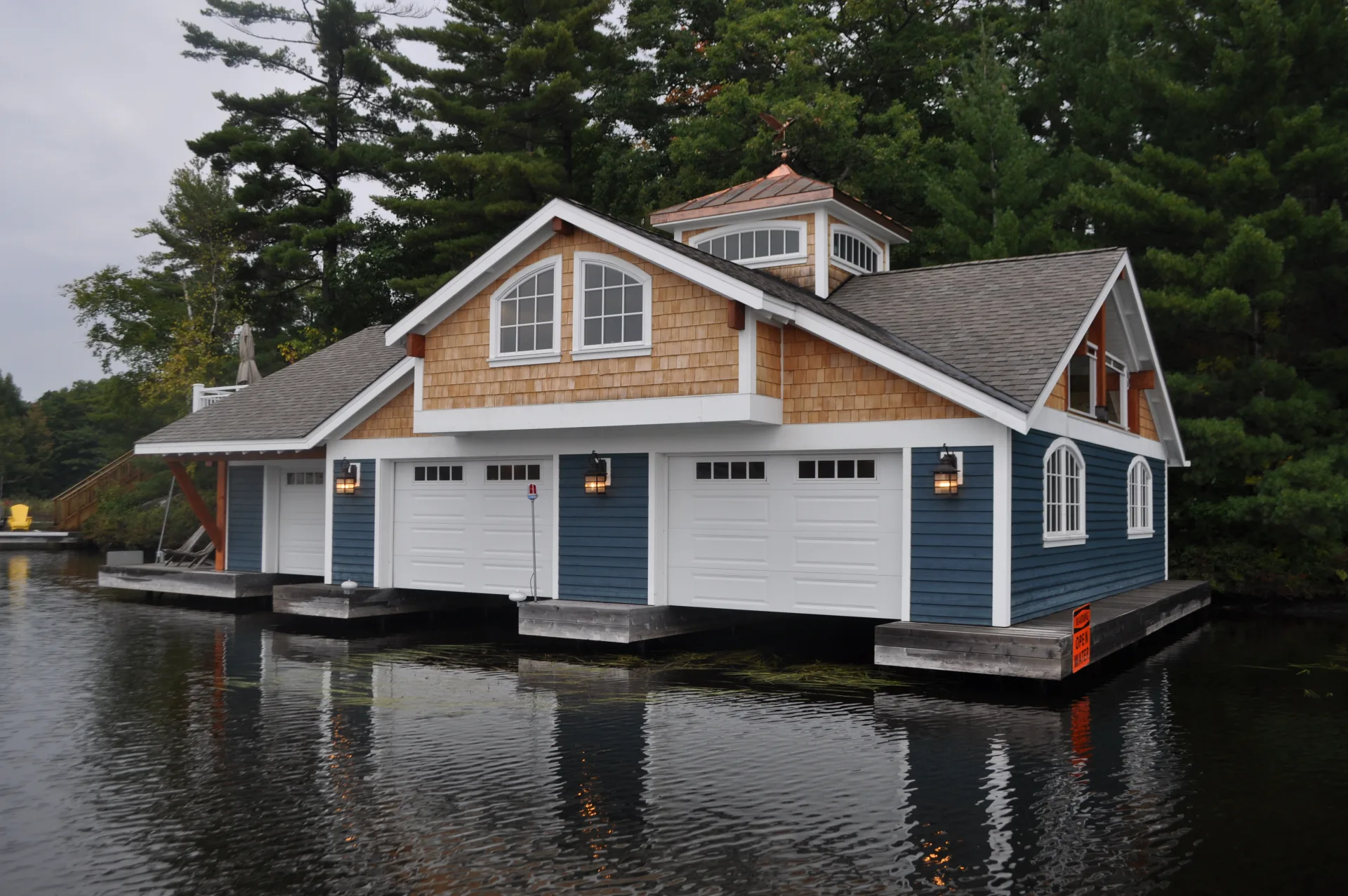
The three approval desks
Township: governs setbacks, lot coverage, and built form. Each Muskoka township has its own bylaw, and the bylaws differ, Muskoka Lakes is the strictest on coverage; Bracebridge and Huntsville are more permissive on certain lakes.
MNR (Ministry of Natural Resources and Forestry): governs the shoreline buffer, in-water structures, and vegetation removal within the high-water mark.
Transport Canada: governs navigable-waters review for in-water structures over a threshold size.
Second-storey accommodation
Permitted on most Big Three lakes (Muskoka, Joseph, Rosseau), with size envelopes set by the township. Permitted on Lake of Bays under similar but slightly different rules. Permits for second-storey use are a separate application from the boathouse shell itself.
Plumbing, potable water, and septic are the technical questions. Most second-storey suites run a holding tank or are tied into the cottage septic if proximity permits.
Replacement vs new construction
Replacing a boathouse on its existing footprint is generally the cleanest path, legacy rights apply. Expanding the footprint, raising the structure, or adding second-storey use where none existed before requires fresh approvals.
Many of our boathouse engagements start with a 'we'd like to expand' brief and end up as a 'we'll rebuild on the existing footprint with the most efficient plan' decision. That decision often saves a year of approvals.
Timeline
Approvals: 4–8 months for a replacement on existing footprint; 6–12 months for expansion or new construction.
Construction: 6–10 months for a two-slip, two-storey boathouse, depending on in-water work windows.
In-water work is restricted to specific calendar windows under MNR rules; missing the window costs a full year.